

Pakistan’s maritime sector is increasingly recognised as a pillar of economic growth. Port infrastructure expansion, shipping activity and economic focus under the proposed National Maritime Policy 2025, the country is standing itself to harness the full potential of its blue economy. In 2025 alone, record profit of USD 360 million were generated by Pakistan’s maritime sector, a promising signal for fisheries, trade and regional connectivity.
Yet beneath this economic optimism lies a growing environmental crisis.
Globally, over 80% of marine pollution originates on land. According to the UN-Water Report 2024, only 38% of global wastewater is treated before entering aquatic ecosystems; a figure already considered insufficient for ecological sustainability. Pakistan’s situation is considerably worse.
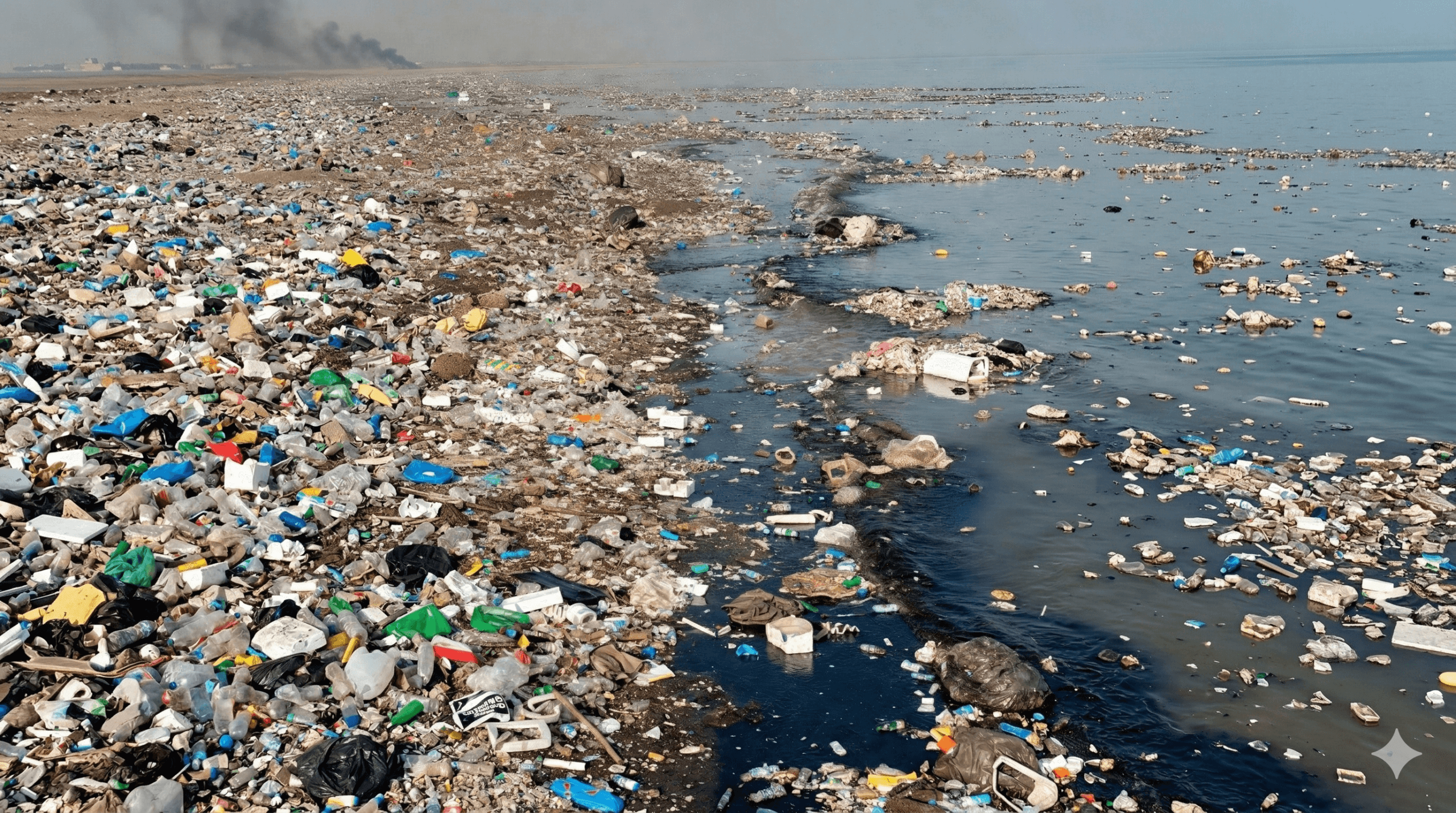
Karachi alone generates approximately 472 million gallons of wastewater daily, along with nearly 16,000 tons of municipal solid waste. About 15% of this wastewater receives some significant treatment. The 85% flows untreated into the Arabian Sea, carrying industrial effluents, heavy metals, plastics, and hazardous chemicals into coastal ecosystems.
The consequences are visible. Degrading water quality, declining fish stocks, damaged mangrove forests and contamination of marine food chains are undermining both biodiversity and livelihoods. What appears to be a coastal problem is, in fact, a national economic risk.
E-waste, along with other hazardous waste streams add another alarming dimension. Pakistan generates nearly 50,000 tons of e-waste per year, with growth rates estimated at 15-20%. In addition, around 40,000 metric tons of e-waste are reportedly imported annually. More than 90% of this waste is treated informally, that release persistent organic pollutants and toxic heavy metals into soil, air, and waterways; eventually making their way into the marine environment.
Atmospheric deposition further intensified the problem. A study by the US Geological Survey indicate that open waste burning, coal combustion and industrial emissions contribute up to 30-35% of global mercury pollution, which can travel long distances before settling in coastal ecosystem. Given the industrial activity and high urbanisation along Sindh’s coastline, this pathway is likely significant for the northern Arabian Sea.
Despite this escalating crisis, Pakistan’s wastewater treatment capacity remains critically inadequate. Large infrastructure initiatives such as the Karachi S-III Project and Karachi S-IV Project were launched to improve sewage conveyance and treatment capacity. These projects outcomes with only 10-15% of Karachi’s sewage treatment. With delays, operational inefficiencies, and limited effective capacity have meant that substantial volumes of untreated wastewater continue to enter coastal waters.
If Pakistan is serious about safeguarding its blue economy, it must treat marine pollution as a strategic national priority.
First, wastewater treatment coverage must be increased from the current 10-15% to at least 60-70% by 2030, with full treatment targeted by 2035. This will require expanding and upgrading existing treatment plants, ensuring proper operation and maintenance, and encouraging public-private partnerships to mobilise investment and technical expertise.
Second, strict implementation of environmental regulations is important. Provisions under the National Environmental Quality Standards (NEQS) must be enforced strictly to avoid untreated industrial effluents from entering rivers and coastal waters. Provincial Environmental Protection Agencies should improve monitoring procedures, including real-time effluent tracking systems and clear reporting frameworks.
Third, Extended Producer Responsibility (EPR) regulations for plastics and electronic waste must be introduced and operationalized. Producers and importers should be held accountable for the lifecycle management of their products. Without shifting responsibility upstream, downstream clean-up efforts will remain insufficient.
Positively, many developing nations offer useful lessons. Ghana’s “Trashy Bags Africa” initiative converts plastic waste into commercially viable products, diverting large quantities of plastics from waterways. The Philippines has launched a billion-dollar blue economy initiative focused on strengthening marine governance and enforcing plastic waste accountability. The Colombian city of Medellín sustained investment and governance reforms and accomplished wastewater treatment coverage of nearly 80%.
Pakistan can adapt such models to its own context.
Lastly, public awareness must not be overlooked. Behavioural change campaigns through educational institutions, media and community engagement programmes are vital to promoting waste management and strengthening environmental stewardship.
Marine pollution is not merely an environmental issue; it is an economic, health and governance challenge. If left unaddressed, it threatens fisheries, tourism, coastal infrastructure and food security; ultimately undermining the very blue economy Pakistan seeks to expand.
The Arabian Sea is not an infinite sink. It is a shared national asset, and its protection must become a national priority.
By Dr Mureed Kazim (PhD Environmental Science)
Policy Think Tank, Bahria University, Islamabad
