

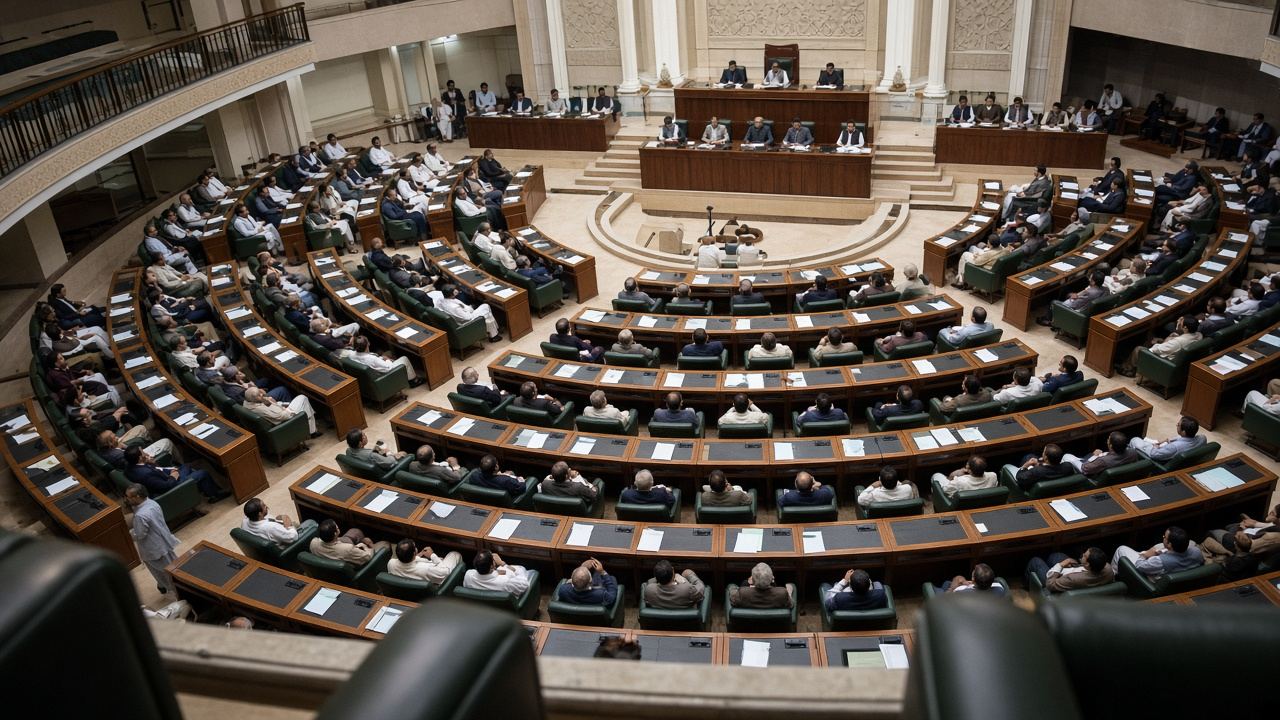
Creating new provinces in Pakistan needs a constitutional amendment, not just a government decision. Under Article 239(4) of the Constitution, the amendment needs two-thirds of the National Assembly, two-thirds of the Senate and two-thirds of the assembly of the province being changed.
This explainer sets out that process step by step, why a referendum cannot replace it, what earlier attempts achieved, and what ministers and Sindh have said in 2026. Constitutional text comes from the official copy of the Constitution issued by the Ministry of Law and Justice.
New provinces at a glance
- 3 votestwo-thirds of the National Assembly, of the Senate and of the affected provincial assembly
- 4 provincesare named in Article 1(2) of the Constitution today
- No draftamendment on new provinces had been made public when we checked on 26 November 2026
Sources: Constitution of Pakistan (Ministry of Law and Justice, as amended up to the 27th Amendment) and news reports cited below.
Listen: short audio summary
In this guide
- New provinces in Pakistan: the quick answer
- What Article 239 says about new provinces in Pakistan
- The numbers behind two-thirds
- Why a referendum cannot create new provinces in Pakistan
- Earlier proposals for new provinces in Pakistan
- What ministers and Sindh say about new provinces in Pakistan
- Is there a draft amendment?
- What to watch next
- Frequently asked questions
New provinces in Pakistan: the quick answer
How are new provinces in Pakistan created?
By a constitutional amendment. A Bill must pass each House of Parliament by at least two-thirds of its total membership. If it changes a province’s limits, it also cannot go to the President for assent until that province’s assembly has passed it by two-thirds of its total membership.
Article 1(2)(a) names the four provinces: Balochistan, Khyber Pakhtunkhwa, the Punjab and Sindh. On our plain reading, adding any of the new provinces in Pakistan that are being discussed means amending the Constitution and following Article 239. This guide is an explainer, not legal advice.
What Article 239 says about new provinces in Pakistan
Article 239 sits in Part XI, “Amendment of Constitution”. Clauses (1) to (3) set the rule for Parliament. For new provinces in Pakistan, clause (4) adds a second lock. It reads:
“A Bill to amend the Constitution which would have the effect of altering the limits of a Province shall not be presented to the President for assent unless it has been passed by the Provincial Assembly of that Province by the votes of not less than two-thirds of its total membership.”
| Stage | Who must vote | Threshold | Clause |
|---|---|---|---|
| 1 | The House where the Bill starts (National Assembly or Senate) | Two-thirds of its total membership | 239(1) |
| 2 | The other House | Two-thirds of its total membership | 239(2) and (3) |
| 3 | The Provincial Assembly of the province whose limits would change | Two-thirds of its total membership | 239(4) |
| 4 | The President | Assent, only after the steps above | 239(2) and (4) |
Clause (6) adds that there is no limitation on Parliament’s power to amend the Constitution. So the barrier is political support, not a ban. Clause (5), as substituted by the 27th Amendment, says no court may call an amendment into question.

The numbers behind two-thirds
On our plain reading, “total membership” means the full strength of a House, not only the members present. We worked out the figures below from the seat counts in Articles 51, 59 and 106. They are our arithmetic, rounded up to a whole vote, and they show how high the bar is for new provinces in Pakistan.
| Body | Total seats | Votes for two-thirds |
|---|---|---|
| National Assembly (Article 51) | 336 | 224 |
| Senate (Article 59) | 96 | 64 |
| Balochistan Assembly (Article 106) | 65 | 44 |
| Khyber Pakhtunkhwa Assembly | 145 | 97 |
| Punjab Assembly | 371 | 248 |
| Sindh Assembly | 168 | 112 |
Geo News notes that the PPP holds a two-thirds majority in the Sindh Assembly. Because clause (4) applies to the province whose limits change, the assembly of that province carries the most weight in any proposal.
Why a referendum cannot create new provinces in Pakistan
Several ministers have talked about a nationwide referendum on new provinces in Pakistan. Article 48(6) does allow a referendum. The Prime Minister may refer “any matter of national importance” to a joint sitting of Parliament, and if the joint sitting approves, a referendum can be held on a question answered “Yes” or “No”.
Nothing in Article 48 says a referendum result changes the Constitution. Article 239 still says a Bill to amend the Constitution must pass the votes listed above, and clause (4) is explicit that a province’s assembly must pass it first. On our plain reading, a referendum could show public opinion, but the Bill would still need every vote.
Reporting points the same way. The News noted that creating new provinces “itself requires adherence to constitutional procedures”, and Arab News writes that new provinces would require constitutional amendments. As of 19 November, a PM Office official said no referendum date had been set.
Earlier proposals for new provinces in Pakistan
The idea of new provinces in Pakistan is not new. The table lists the main earlier attempts. None became an amendment, and Article 1(2)(a) still lists four provinces.
| Date | What happened | Outcome |
|---|---|---|
| 2010 | The 18th Amendment renamed the North West Frontier Province as Khyber Pakhtunkhwa. Protests in Hazara followed and a movement for a Hazara province began. | See Dawn, November 2018 |
| 9 May 2012 | The Punjab Assembly adopted two resolutions, one to restore Bahawalpur province and one to create a South Punjab (Janoobi Punjab) province, and asked for a national commission. The National Assembly had passed a resolution on South Punjab the week before. | Dawn, 10 May 2012 |
| January 2013 | A parliamentary commission chaired by Senator Farhatullah Babar agreed on one province named “Bahawalpur South Punjab” and approved a draft report. | Express Tribune, 27 Jan 2013. No province was created. |
| March 2014 | The Khyber Pakhtunkhwa Assembly passed resolutions on a Hazara province and on renaming the province Hazara Pakhtunkhwa. | Express Tribune, 22 Mar 2014. Dawn later reported the Hazara resolution did not get two-thirds. |
The 2012 resolutions show the pattern. Provincial assemblies and parliamentary commissions can recommend, but the amendment itself needs the full set of votes in Article 239.
What ministers and Sindh say about new provinces in Pakistan
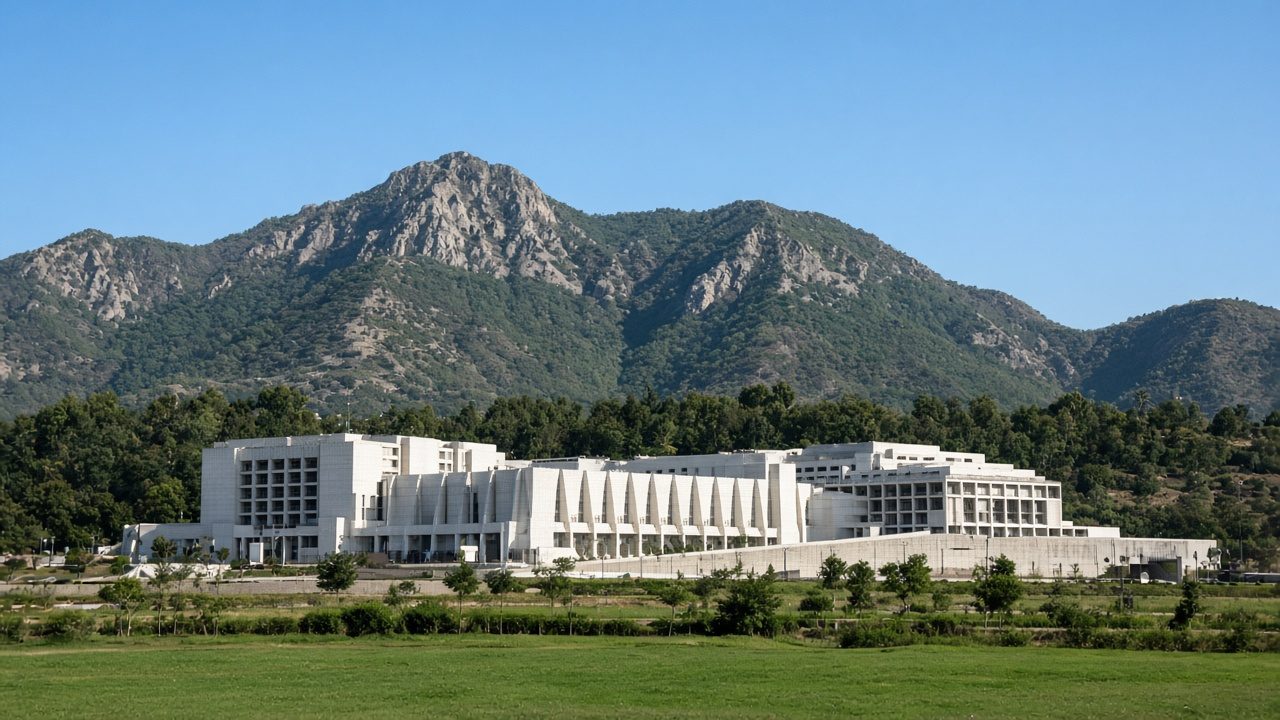
The debate on new provinces in Pakistan restarted in July 2026. These are the main public statements, reported by the outlets named. We attribute each one and do not endorse any position.
| Date | Who | What was said or done |
|---|---|---|
| 30 Jul | Interior Minister Mohsin Naqvi | Argued that the governance system was no longer working and proposed new administrative units or provinces, as reported by The News. |
| 3 Sep | Sindh Assembly | Unanimously passed a resolution rejecting any division of Sindh, citing Article 239(4). MQM-P boycotted the vote. See Geo News and Business Recorder. |
| 4 Sep | Planning Minister Ahsan Iqbal | Proposed 12 to 15 new provinces by dividing each province into three, and asked for a committee. The prime minister’s coordinator Rana Ihsaan Afzal said no decision had been taken. See Geo News. |
| 29 Oct | Ahsan Iqbal | Said the government was not drafting a 28th Amendment to create more provinces. See The News. |
| 8 Nov | Defence Minister Khawaja Asif | Said the country could have as many as 12 provinces if the exercise was administrative, not linguistic, ethnic or political. See Dawn. |
| 17 Nov | Information Minister Attaullah Tarar | Backed a referendum on new provinces. A senior PM Office official said no date had been decided and the prime minister had not ordered preparations. The PPP opposed any division of Sindh. See Arab News. |
Sindh’s position rests on clause (4). Chief Minister Murad Ali Shah said the Constitution requires a two-thirds majority in the relevant provincial assembly and in the National Assembly for any change to boundaries, and that Sindh’s boundaries cannot change without its assembly’s consent, according to Business Recorder.
Is there a draft amendment?
No draft amendment on new provinces in Pakistan has been made public. The News reported on 22 November that there was no proposal on paper at the Prime Minister’s Office or the Ministry of Parliamentary Affairs for a referendum, and that the matter had not been taken up at a federal cabinet meeting. On 9 November, Dawn mentioned media reports of a possible 28th Amendment and a referendum, but those were reports and not an official plan.
If a Bill is introduced in the National Assembly or the Senate, its text will be public and the vote counts above will apply. Our earlier reports on the 2024 constitutional amendment package and the 26th Constitutional Amendment cover different changes, mainly to the courts.
What to watch next
- A published Bill: a Constitution Amendment Bill introduced in the National Assembly or the Senate.
- Floor votes: whether the Bill reaches 224 in the National Assembly and 64 in the Senate.
- Provincial assemblies: a vote in the assembly of each province whose limits would change.
- Cabinet or joint-sitting action: any formal move on a referendum under Article 48(6).
- Seat and revenue formulas: Ahsan Iqbal said new provinces would need an equitable formula so that representation, such as seats in the Senate, does not shift too sharply.
Frequently asked questions
How are new provinces in Pakistan created?
By a constitutional amendment under Article 239. It needs two-thirds of the total membership of the National Assembly and the Senate, and two-thirds of the total membership of the Provincial Assembly of the province whose limits would change, before the President can give assent.
What does Article 239(4) say?
It says a Bill to amend the Constitution that alters the limits of a province cannot be presented to the President for assent unless that Provincial Assembly has passed it by at least two-thirds of its total membership.
Can a referendum create a new province?
Article 48(6) allows a referendum on a matter of national importance, but nothing in it says the result changes the Constitution. On our plain reading, the amendment votes in Article 239 are still required.
Can Parliament create a province without the provincial assembly?
Not under clause (4). A Bill that alters a province’s limits cannot go to the President unless that province’s assembly has passed it by two-thirds of its total membership.
How many provinces are there in Pakistan now?
Four: Balochistan, Khyber Pakhtunkhwa, the Punjab and Sindh, as listed in Article 1(2)(a). Islamabad is the Federal Capital Territory.
Have earlier proposals for new provinces in Pakistan succeeded?
No. Proposals for South Punjab, Bahawalpur and Hazara were debated between 2010 and 2014, but no amendment became law.
Is a draft amendment on new provinces in Pakistan public?
Not as of 26 November 2026. The News reported on 22 November that no formal proposal had been initiated, and Ahsan Iqbal said on 29 October that no 28th Amendment was being drafted for this purpose.
