

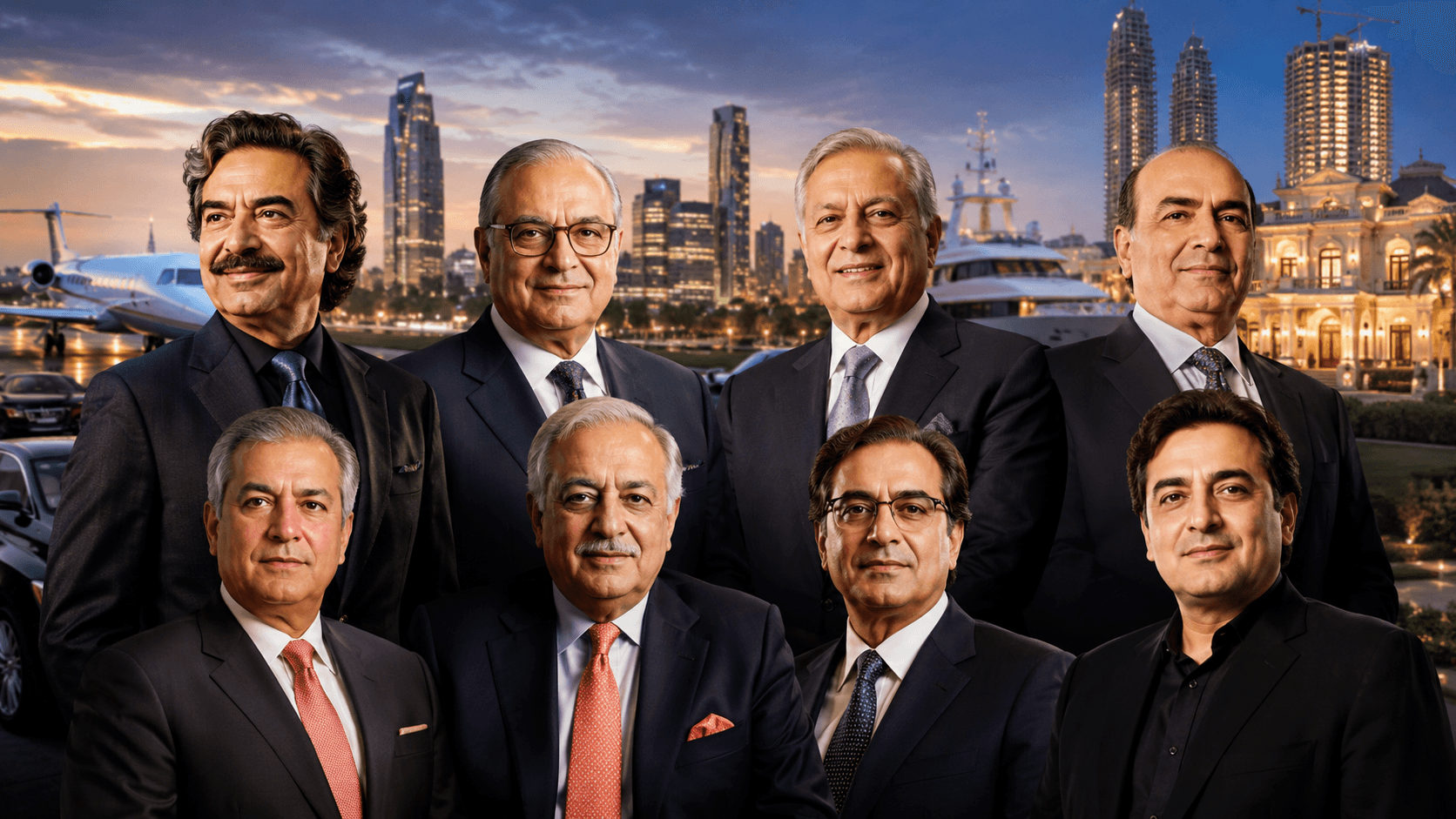
Who is the richest person in Pakistan in 2026? Shahid Khan, the Pakistani-American owner of auto-parts manufacturer Flex-N-Gate and the NFL’s Jacksonville Jaguars, is widely cited as the richest person of Pakistani origin, with estimates ranging from roughly $8 billion to $15 billion depending on the source and year of valuation. Among billionaires who are resident in Pakistan, Mian Muhammad Mansha, chairman of the Nishat Group and MCB Bank, is consistently ranked as the wealthiest, with a fortune estimated between $3 billion and $7.8 billion.
Why the Numbers Don’t Always Match (And Why That Matters)
If you’ve searched this topic before, you’ve probably noticed that no two lists agree. One site puts Mian Mansha at $5 billion, another says $7.8 billion, a third says closer to $3 billion. This isn’t sloppy journalism on anyone’s part; it reflects a real structural problem with measuring wealth in Pakistan.
Unlike the United States, where the SEC forces public disclosure of major shareholdings, Pakistan has no centralized, mandatory wealth-disclosure system for private conglomerate holdings. Most Pakistani billionaires built diversified empires that mix listed companies (traded on the Pakistan Stock Exchange, where share prices are public) with private land holdings, family trusts, and unlisted subsidiaries (which are not public). Forbes has also not published a dedicated, continuously updated “Pakistan Rich List” the way it does for India or the US, so most current-year figures circulating online are compiled by financial trackers and business publications using a mix of stock valuations, past Forbes data points, and analyst estimates.
Our approach on Insight Pakistan is to report the range of publicly available estimates for each individual, cite where each number comes from, and flag when a figure is old and simply being recycled across the internet without an update. That’s the standard we’re holding this list to.
Top Richest People in Pakistan 2026 (At a Glance)
| Rank | Name | Primary Business | Estimated Net Worth (2026) |
|---|---|---|---|
| 1 | Shahid Khan | Flex-N-Gate (auto parts), Jacksonville Jaguars, Fulham FC | $8B – $15B |
| 2 | Mian Muhammad Mansha | Nishat Group, MCB Bank | $3B – $7.8B |
| 3 | Sir Anwar Pervez | Bestway Group (UK/Pakistan cement & banking) | $3B – $4B |
| 4 | Sadruddin Hashwani | Hashoo Group (Pearl Continental, Marriott hotels) | ~$900M – $1.5B |
| 5 | Malik Riaz Hussain | Bahria Town (real estate) | Estimated in the billions; privately held, not independently verified |
| 6 | Saigol Family (Tariq Saigol & family) | Kohinoor Maple Leaf Group (cement, textiles) | Multi-hundred-million to low billions (family-held) |
| 7 | Rafiq Habib & House of Habib | Habib Bank AG Zurich, Habib Metro, industrial holdings | Multi-hundred-million to billions (family-held) |
| 8 | Salman Iqbal & ARY Family | ARY Media Group, ARY Gold, real estate | Estimated in the hundreds of millions to billions |
Figures for privately held family conglomerates (Riaz, Saigol, Habib, ARY) are the least verifiable of the group since none of these families publish consolidated wealth statements. We list them because they consistently appear across independent rankings, but treat the specific dollar amounts as directional, not precise.
1. Shahid Khan – The Richest Person of Pakistani Origin
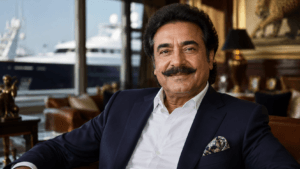
Shahid Khan was born in Lahore in 1950 and moved to the United States at age 16 with very little money. He worked his way through the University of Illinois and eventually bought a majority stake in Flex-N-Gate, an auto-parts supplier that now manufactures components for Toyota, Honda, and Volkswagen across dozens of plants in North America. He is best known internationally as the owner of the NFL’s Jacksonville Jaguars and the English Premier League’s Fulham FC.
Because his fortune is almost entirely dollar-denominated and tied to a private US manufacturing company plus two sports franchises with independently tracked valuations, Shahid Khan’s net worth estimates are somewhat more reliable than domestic Pakistani fortunes, though even here, sports-team valuations swing significantly year to year, which is why estimates for him range from roughly $8 billion to $15 billion depending on the source and timing.
2. Mian Muhammad Mansha – Pakistan’s Richest Resident Businessman
Mian Mansha is the chairman of the Nishat Group, Pakistan’s largest private business conglomerate, spanning MCB Bank, Nishat Mills, Nishat Power, DG Khan Cement, Adamjee Insurance, and Nishat Hyundai. Born in Chiniot in 1941 into a business family that relocated from India during Partition, Mansha took over the family textile operation in 1969 and diversified it into banking after acquiring a controlling stake in MCB Bank during Pakistan’s 1990s privatization drive.
He became the first Pakistani ever listed on Forbes’ global billionaires ranking in March 2010, at an estimated $2.5 billion. Current estimates for 2026 vary from roughly $3 billion to $7.8 billion, largely because MCB Bank and Nishat Mills are publicly traded (so their share value is verifiable) while a large share of the group’s cement, power, and hospitality assets are privately held.
3. Sir Anwar Pervez – Bestway Group
Born in Rawalpindi in 1935, Anwar Pervez emigrated to the UK and built Bestway Group into one of Britain’s largest wholesale cash-and-carry businesses. Bestway later expanded into Pakistan, becoming a major shareholder in United Bank Limited (UBL) and acquiring a significant cement manufacturing footprint. He was knighted in 1999 for his contributions to UK business and was awarded Hilal-e-Pakistan for his investment back into Pakistan’s economy. Estimates place his fortune between $3 billion and $4 billion.
4. Sadruddin Hashwani – Hashoo Group
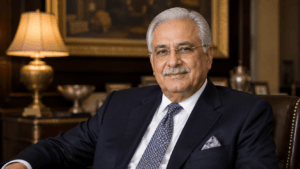
Karachi-born Sadruddin Hashwani founded the Hashoo Group, which owns and operates Pearl Continental Hotels and holds franchise rights for several Marriott properties in Pakistan, alongside interests in oil and gas exploration and fertilizer production. His estimated net worth sits closer to $900 million to $1.5 billion, making him one of the more modest fortunes on this list relative to the banking and manufacturing tycoons above him, though still firmly among Pakistan’s wealthiest individuals.
5. Malik Riaz Hussain – Bahria Town
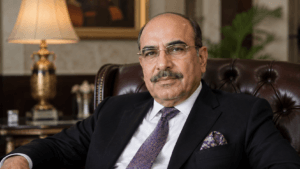
Malik Riaz built Bahria Town into Asia’s largest private real estate development company, with gated housing projects in Karachi, Lahore, and Rawalpindi/Islamabad. His wealth is almost entirely tied up in land and development assets, which makes it exceptionally difficult to value independently; there is no public share price for Bahria Town, and land valuations in Pakistan fluctuate heavily by location and documentation status. Multiple lists place him among the top five wealthiest Pakistanis, though we’re flagging his figure as one of the least independently verifiable on this page.
6–8. The Industrial and Banking Families: Saigol, Habib, and ARY
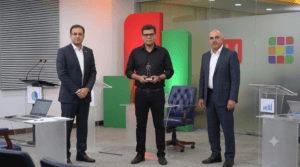
Beyond the individual names above, a handful of multi-generational family conglomerates consistently show up on Pakistani wealth rankings:
- The Saigol family controls the Kohinoor Maple Leaf Group, which includes Maple Leaf Cement and Kohinoor Textile Mills, two of Pakistan’s largest export-oriented manufacturers.
- The Habib family, through the House of Habib, holds interests spanning Habib Bank AG Zurich, Habib Metropolitan Bank, and diversified industrial and automotive holdings.
- The ARY Family, led by Salman Iqbal, built a media and business empire spanning ARY News, ARY Digital, ARY Gold, and large-scale real estate ventures including the ARY Laguna project.
These are family-held businesses rather than individually attributed personal fortunes, which is exactly why their net worth figures are reported as wide ranges rather than precise numbers across every source we reviewed.
What’s Changing: The Next Generation of Pakistani Wealth
The traditional wealth story in Pakistan textiles, cement, sugar, and banking passed down through founding families is starting to shift. Real estate and digital infrastructure have become significant new wealth generators over the past decade, and a small but growing number of Pakistani-origin entrepreneurs are building fortunes through global technology ventures rather than domestic manufacturing.
The most notable recent example is Sualeh Asif, a Pakistani-American co-founder of the AI coding startup Cursor (Anysphere), whose rapid rise illustrates how the next generation of Pakistani-origin wealth may increasingly come from software and artificial intelligence rather than land or heavy industry. Domestically, Pakistan’s IT and freelance export sector, which Insight Pakistan has covered in depth in our freelancer payment methods and gig-economy coverage, is producing a new wave of smaller-scale digital entrepreneurs whose net worth is far below the billionaire tier today but growing at a pace traditional industrial wealth rarely matches.
Faster mobile connectivity is part of that story too. As we reported in our piece on Pakistan’s telecom sector performance, the industry now generates roughly Rs. 955 billion annually, underscoring how digital infrastructure has become a serious contributor to national wealth creation, not just a support sector. You can follow ongoing coverage of these shifts in our Business section.
Where Pakistani Wealth Actually Comes From: Sector Breakdown
- Banking & Finance: MCB Bank, UBL, Habib Bank AG Zurich, Habib Metro form the financial backbone behind several fortunes on this list.
- Textiles: Still Pakistan’s largest export industry and the original source of wealth for both the Mansha and Saigol families.
- Cement: DG Khan Cement, Maple Leaf Cement, and Bestway Cement benefit from continuous domestic construction and infrastructure demand.
- Real Estate: Bahria Town and similar developers have created some of the fastest-growing (and hardest-to-verify) fortunes in the country.
- Hospitality: Pearl Continental and Marriott-franchised properties under the Hashoo Group represent Pakistan’s most valuable hotel assets.
- Media: ARY’s television and digital footprint shows how media ownership can compound into broader business empires.
- Global Manufacturing & Sports: Shahid Khan’s Flex-N-Gate and sports franchise ownership represent wealth built almost entirely outside Pakistan, though his Pakistani roots keep him firmly part of this conversation.
Our Verification Methodology
Because this topic gets asked about often, including by readers who want to cite or fact-check these numbers later, here’s exactly how this list was compiled:
- Cross-referenced multiple independent sources, including Forbes’ historical billionaire data points, financial-tracking publications, and business news coverage, rather than relying on a single ranking site.
- Reported ranges, not single numbers, wherever public estimates disagreed by more than roughly 20%.
- Flagged privately held, family-controlled fortunes (Bahria Town, Saigol Group, House of Habib, ARY) as inherently less verifiable than publicly traded holdings, since there is no share price or regulatory filing to check them against.
- Excluded unverified viral figures that appeared on only one low-authority site with no sourcing.
- Will update this page whenever new, better-sourced data becomes available this is a living reference, not a one-time snapshot.
If you’re citing this article, we recommend citing the range provided along with the publication date, rather than a single precise figure, given the sourcing limitations described above.
