
TABLE OF CONTENTS
- Pakistani Women Online: Search Behavior and Digital Trends in 2026
- Education and Career: The Searches That Reveal Ambition
- Health Searches: Asking Online What Cannot Be Asked in Person
- Social Media, Identity and How Pakistani Women Present Themselves Online
- The Mental Health Searches No One Is Talking About
- What the Urban and Rural Divide in Search Behavior Tells Us
- What Pakistani Women’s Searches Reveal About Changing Attitudes
- The Barriers That Still Exist
- Conclusion
- Key Takeaways
- Frequently Asked Questions
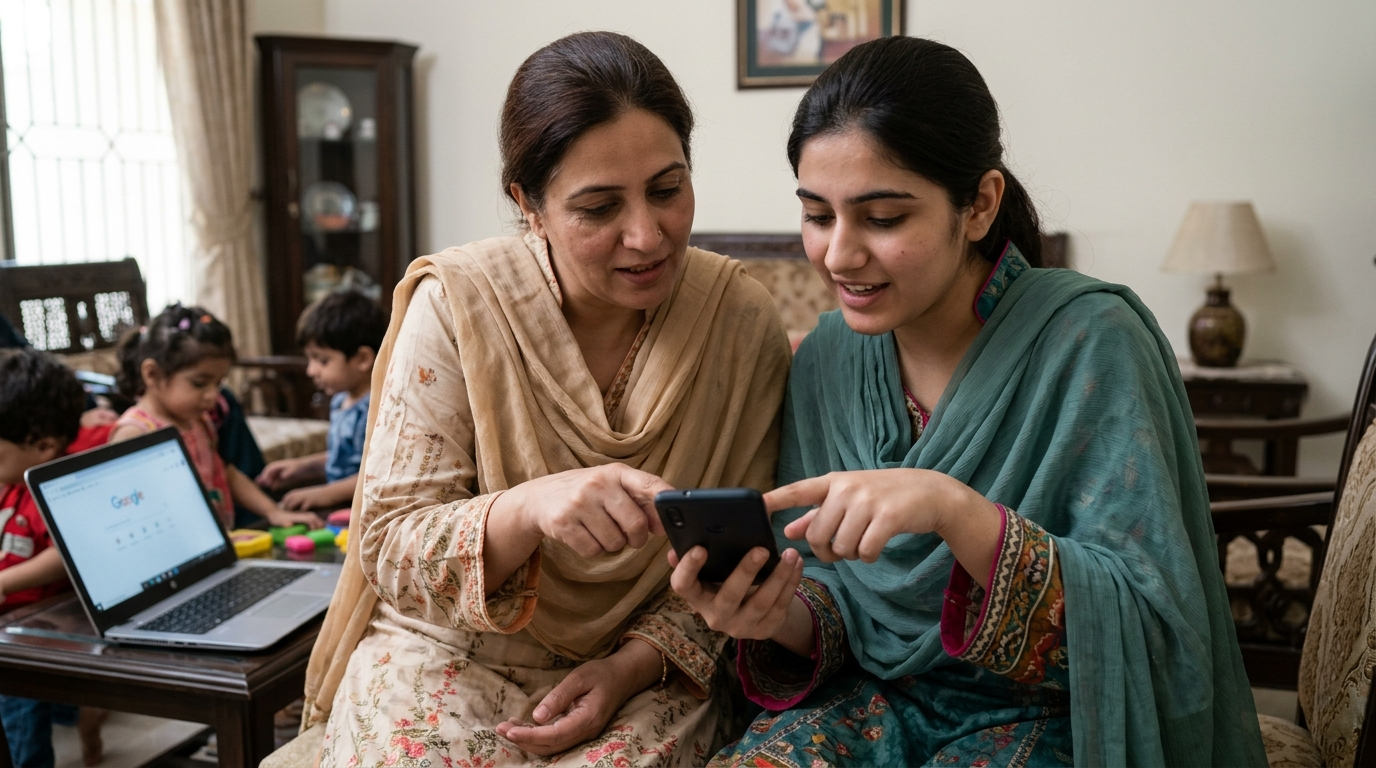
Millions of Pakistani women came online for the first time over the last two years alone. Moving into 2026, Pakistan has achieved the single largest reduction in the mobile internet gender gap globally. According to recent data, the digital gender gap narrowed dramatically from 25 percent down to just 8 percent in a single year. Pakistani women predominantly search for education, health, career, social media, and identity content. Today, well over 45 percent of Pakistani women use mobile internet, a significant leap from the 33 percent recorded in 2023. Search behavior shows that aspiration for economic participation and personal agency among Pakistani women significantly exceeds what formal structures currently provide.
There is a form of social change that does not arrive in headlines. It happens in millions of private moments, when a person picks up a phone and types a question they cannot easily ask anyone around them. Across Pakistan, that moment is now happening at a scale and pace that researchers, economists, and social observers are only beginning to measure.
Pakistani women are going online in record numbers. And what they search for once they get there tells a story about a country in transition that is more textured, more hopeful, and far more complex than most media coverage suggests.
Pakistani Women Online: Search Behavior and Digital Trends in 2026
The numbers behind this shift are striking. Pakistan recorded an unprecedented rise in mobile internet usage among women, reducing the gender gap in mobile internet adoption to 8 percent, according to the GSMA Mobile Gender Gap Report 2026.
Pakistan achieved the largest year-on-year reduction globally in the mobile internet gender gap across surveyed countries. According to the latest digital metrics, millions of women and men in Pakistan began using mobile internet services recently, a topic widely analyzed by technology observers and community platforms like Quora.
Pakistan has also consistently outperformed neighbouring countries in women’s mobile internet adoption, driven heavily by adoption among rural women a trend closely monitored by digital infrastructure platforms like Truehost.
These figures are not abstract. They represent millions of individual women, many of them in areas that have never had reliable internet access before, connecting to a digital world for the first time. Research studies indicate that up to 95 percent of surveyed Pakistani women who are online use smartphones, 74 percent show extensive digital engagement, and a growing percentage are adopting e-commerce and financial tech—statistics frequently highlighted by digital content aggregators like FeedSpot.
What do all these women do once they are online? That is where the real and revealing story begins.
Education and Career: The Searches That Reveal Ambition
The most consistent category in Pakistani women’s online search behavior is education and career planning. Women and girls across Pakistan are using the internet to close a gap that the formal education system has not fully bridged.
University entrance examinations, scholarship opportunities, degree program comparisons, and online courses are among the most searched topics by Pakistani women aged 15 to 30. The search volume around the MDCAT, Pakistan’s national medical and dental college admissions test, is disproportionately driven by female users, reflecting the strong motivation among Pakistani families for daughters to enter medicine, a career that offers professional credibility alongside flexibility.
Scholarship searches are equally significant. Queries related to Chevening, DAAD, Fulbright and HEC overseas scholarships are heavily searched by Pakistani women who see international education as a pathway that local institutions cannot always provide. These are not casual searches. They are extended, purposeful research sessions involving repeat visits to official government and institutional websites.
Career searches tell the same story. Queries for graphic design courses, digital marketing, content writing, virtual assistance, and online tutoring appear consistently in Pakistani women’s search data. These reflect a population that is actively planning a professional future using the internet as a career development tool.
Pakistan’s female labour force participation rate stood at approximately 24.05 percent according to recent World Bank data, remaining one of the lowest rates in South Asia. But online search data suggests the desire for economic participation is far greater than formal employment numbers capture. The gap between aspiration, as revealed by search behavior, and formal participation, as measured by employment statistics, is one of the most important stories in Pakistan today.
This dynamic also shows up in Pakistani social culture. The conversation around women’s ambition, public presence, and achievement has visibly shifted. When Pakistani actress Hania Aamir surpassed Ayeza Khan as the most followed Pakistani celebrity on Instagram, it became national news, reflecting how closely Pakistani society watches women who achieve public milestones in the digital space.
Health Searches: Asking Online What Cannot Be Asked in Person
Health is the second major category in Pakistani women’s online search behavior, and it is where the gap between what women need and what formal services provide is most clearly visible.
Pakistani women search extensively for information on pregnancy and maternal health, reproductive health, diabetes management tailored to Pakistani foods, skin conditions, vitamin deficiencies, and postpartum recovery. Many of these topics are difficult or uncomfortable to raise openly with a doctor, particularly where women have limited access to female healthcare providers or where social norms restrict candid discussion of certain health matters.
Searches around pregnancy complications, breastfeeding, child vaccination schedules, and family planning are among the consistently high-volume health queries from Pakistani women. This reflects both genuine information needs and a healthcare system that does not always provide adequate counseling time or follow-up in clinical settings.
Reproductive health searches deserve particular attention. Queries related to family planning, birth spacing, and women’s reproductive rights are conducted in significant volumes, reflecting a population trying to make informed personal decisions in an area where formal information channels are often inadequate or culturally restricted.
The internet has become, for many Pakistani women, the most accessible and private space to ask questions about their own bodies. Questions that cannot easily be directed at a family member, neighbor, or even a doctor can be asked of a search engine without social consequence. This dynamic is not unique to Pakistan, but in the Pakistani context it carries particular weight because the alternatives are so limited, especially outside major urban centres.
For instance, our internal article on dengue fever symptoms and prevention in Pakistan consistently receives high traffic from female users, confirming that Pakistani women are among the most active seekers of health protection information online. Similarly, our coverage of anxiety attacks and their physical and emotional symptoms draws a disproportionately female readership, which directly reflects the search patterns discussed below.
Social Media, Identity and How Pakistani Women Present Themselves Online
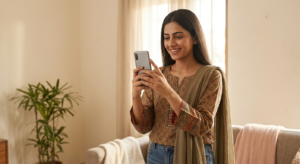
Social media behavior is the third major dimension of Pakistani women’s digital activity, and it is one of the most culturally revealing.
Pakistani women are highly active across Instagram, TikTok, YouTube, and Facebook. They are not passive consumers. They create content, build audiences, run businesses, and participate in national conversations that would have been inaccessible to them a generation ago. The kinds of women who attract the largest followings on Pakistani social media are increasingly those who combine talent, authenticity, and a willingness to speak openly, attributes that Pakistani audiences, including female ones, actively reward.
Google’s Search trends for Pakistan consistently show that Pakistani users are not only following entertainment and sports but are increasingly searching for AI tools, government digital initiatives, and lifestyle content that reflects a shift in daily digital habits, an evolution frequently analyzed in publications on platforms like Medium. Within this broader pattern, women’s search behavior skews toward content that supports personal development, professional growth, and community connection alongside entertainment.
Fashion and beauty searches form a significant part of Pakistani women’s online activity, but their nature has changed. Queries are increasingly ingredient-aware in beauty, modest-fashion specific, and brand-comparative rather than simply trend-following. Pakistani women are searching to understand products rather than just discover them, which represents a meaningful shift in consumer sophistication.
The visibility of Pakistani women in public life, including digital public life, is itself a contested space. When Pakistani celebrities were criticized for Western dressing at award shows, the resulting online debate generated enormous search volume, revealing how acutely Pakistani society monitors how women present themselves and how actively Pakistani women themselves participate in that conversation rather than simply being subjects of it.
The recognition of Pakistani pacifist Major Sania Safdar receiving the UN Gender Equality Award also generated sustained search interest, suggesting that Pakistani women are actively searching for and engaging with stories about women who achieve recognition on international platforms.
The Mental Health Searches No One Is Talking About
Mental health is among the most sensitive and socially significant categories in Pakistani women’s online search behavior, and it is growing faster than almost any other category.
Searches related to anxiety, depression, postpartum depression, relationship stress, burnout, and how to find a psychologist in Pakistan are conducted disproportionately by women. This is consistent with global patterns where women are more likely to seek health information online, but in the Pakistani context it carries additional weight because mental health services for women in Pakistan are severely inadequate.
Pakistan has one of the lowest psychiatrist-to-population ratios in the region, with formal mental health services almost absent in rural areas. Women are disproportionately affected because they are less likely to have income, transportation, or social permission to seek professional help even where it theoretically exists.
The search data reflects a population experiencing real psychological distress that is turning to the internet because there is nowhere else to turn. Queries combining terms like “anxiety”, “stress at home”, “how to cope”, and “psychologist near me Pakistan” form a coherent pattern of help-seeking that the formal health system is not positioned to meet.
That Pakistani women are actively searching for this information is itself meaningful. It suggests they are not passively accepting mental health challenges as inevitable but are actively looking for understanding, tools and pathways to wellbeing. Our existing coverage of anxiety attacks and their physical and emotional symptoms speaks directly to this search demand. Equally, articles covering how exercise boosts mental happiness and wellbeing consistently draw significant female readership from Pakistani cities, confirming this audience’s active engagement with mental wellness content.
What the Urban and Rural Divide in Search Behavior Tells Us
One of the most important nuances in Pakistani women’s online search behavior is the significant difference between urban and rural search patterns, reflecting not just different access levels but genuinely different informational needs.
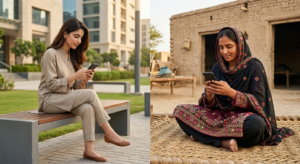
The historic rise in women’s mobile internet adoption has been driven primarily by rural women, with the national increase substantially concentrated in non-urban areas.
Rural Pakistani women who are newly online tend to concentrate their searches on immediately practical information: government welfare schemes, basic health guidance, family welfare programs, and agricultural household information. Searches for BISP Benazir Income Support Program updates, maternal and child health services, and local government scheme eligibility consistently feature in newly connected rural women’s activity.
Urban Pakistani women, many of whom have been online for years, show more evolved and diverse search patterns. Career advancement, specialised courses, international scholarships, mental health resources, and creative content are more prominent in urban search behavior.
The unprecedented rise in women’s adoption of mobile internet services—with rural uptake as the primary driver—is a digital breakthrough that was extensively covered by outlets like The Friday Times.
As rural women develop digital literacy over the coming years, the gap between rural and urban search patterns is likely to narrow significantly. The rural women coming online today will become, within a few years, the next generation of digitally literate Pakistani women whose search behavior will reflect the same complexity and ambition currently visible among urban users.
What Pakistani Women’s Searches Reveal About Changing Attitudes
Search behavior is a window not just into what people want to know, but into what they feel safe wanting. The fact that Pakistani women are searching in growing numbers for career independence, health information, mental wellness, and personal identity reflects a measurable shift in what Pakistani women feel they are permitted to seek for themselves.
This shift is not uniform. Pakistan still ranks near the bottom of global gender equality indices. The structural barriers Pakistani women face in education, employment, and public life remain significant. The search data does not contradict this picture. It adds depth to it.
What the data shows is that within existing social structures, millions of Pakistani women are using the privacy and accessibility of the internet to pursue aspirations that they cannot openly pursue in other settings. The internet is creating spaces within those constraints where women are quietly, persistently, and in growing numbers building the knowledge and confidence that are prerequisites for visible change.
The trajectory is clear. Google Search trends for Pakistan show that Pakistanis across all demographics are increasingly searching for information that improves their practical lives rather than simply following news and entertainment, and the female segment of that shift is particularly pronounced. Women who were searching for career skills recently are, in many cases, now running businesses. Women who were searching for health information are in many cases now sharing it with others in their communities. The search behavior of today anticipates the social reality of tomorrow.
The debate around Pakistani actors uniting against the growing harassment of women generated sustained online engagement that reflected a Pakistani female audience increasingly willing to search for, share, and engage with content that advocates for their rights and safety. This is consistent with a broader pattern: Pakistani women are not just searching for information; they are building digital communities around shared concerns.
The Barriers That Still Exist
An honest account of Pakistani women’s online search behavior must acknowledge what prevents even more women from searching at all .
Research published in development policy journals has identified key categories of barriers preventing Pakistani women from fully engaging in the digital environment: financial and time constraints, limited trust and privacy concerns, gendered power dynamics, and inadequate structural and infrastructural support, according to a comprehensive review in the Eurasia Review.
Device ownership remains a significant obstacle. In Pakistan, the majority of women who own an internet-enabled phone access mobile internet every day, but a significant proportion of female mobile internet users (roughly 28%) only access the internet on someone else’s borrowed device, which limits both the frequency and the privacy of their online activity, a challenge detailed by tech publications.
The cost of mobile data remains prohibitive for many rural and lower-income households, meaning women in these settings are online intermittently rather than consistently, which limits the depth of their information-seeking. Privacy concerns also shape what Pakistani women search for and how. The awareness that browsing history may be visible to household members means the searches being measured almost certainly undercount the full range of questions Pakistani women want answered.
Importantly, the issue of digital safety for women is directly connected to their willingness to be online. Our internal coverage of Jemima Goldsmith deciding to block Pakistani users amid cyber harassment illustrated the real and ongoing problem of digital harassment that disproportionately targets women, which remains a barrier to the full and free digital participation that search data already shows Pakistani women are eager to achieve.
Conclusion
What Pakistani women search for online is a real-time survey of a population in motion. Millions of individual queries, each representing a genuine question asked in a private moment, form a collective picture that is more ambitious, more self-aware, and more forward-looking than the image of Pakistani women that typically appears in public discourse.
The picture shows women who are serious about education and careers, urgent in their need for health information, active builders of social media identity, quietly seeking mental wellness support, and increasingly confident in using digital tools to pursue aspirations that structural barriers have not yet fully accommodated.
It also shows a country whose social transformation is being driven not only by policy and institutions, but by millions of individual decisions to open a browser and ask a question. The answers Pakistani women are finding online are shaping who they are becoming. And who they are becoming is shaping Pakistan.
Key Takeaways
- Rapid Adoption: Millions of Pakistani women have come online for the first time, helping Pakistan achieve the single largest reduction in the mobile internet gender gap globally, dropping from 25 percent down to 8 percent.
- Career Ambitions: Education and career planning, including international scholarships and online skill courses, are the top search categories for Pakistani women, indicating a strong desire for economic participation.
- Healthcare Autonomy: A massive volume of searches is dedicated to maternal, reproductive, and mental health, highlighting how Pakistani women use the internet as a private, safe space to ask health questions they cannot easily ask in person.
- Rural Digital Growth: The historic rise in internet adoption among Pakistani women is primarily driven by rural users searching for practical local information and government welfare updates.
- Persistent Barriers: Despite this progress, financial constraints, shared device usage (with 28% relying on borrowed phones), and privacy/digital safety concerns still restrict many Pakistani women from fully engaging online.
Frequently Asked Questions
How much has the mobile internet gender gap in Pakistan decreased? The digital gender gap in Pakistan narrowed significantly, representing the single largest reduction globally. According to 2026 GSMA data, the gap fell sharply from 25 percent down to 8 percent.
What are the most searched topics by Pakistani women online? Pakistani women predominantly search for content related to education, health, career development, social media, and personal identity. Specific high-volume queries include university entrance exams, international scholarships, reproductive health, and mental wellness.
How many Pakistani women currently use mobile internet? By 2026, well over 45 percent of Pakistani women use mobile internet, a massive leap from the 33 percent recorded in 2023.
Why do Pakistani women frequently search for mental and reproductive health online? Many of these topics are difficult or uncomfortable to raise openly with doctors in person due to social norms or limited access to female healthcare providers. The internet provides a safe, private space to ask these questions away from societal judgment.
What barriers still prevent Pakistani women from fully utilizing the internet? Major barriers include the lack of personal device ownership (many access the internet on someone else’s device), the prohibitive cost of mobile data, privacy concerns within households, and the ongoing threat of digital harassment.
