

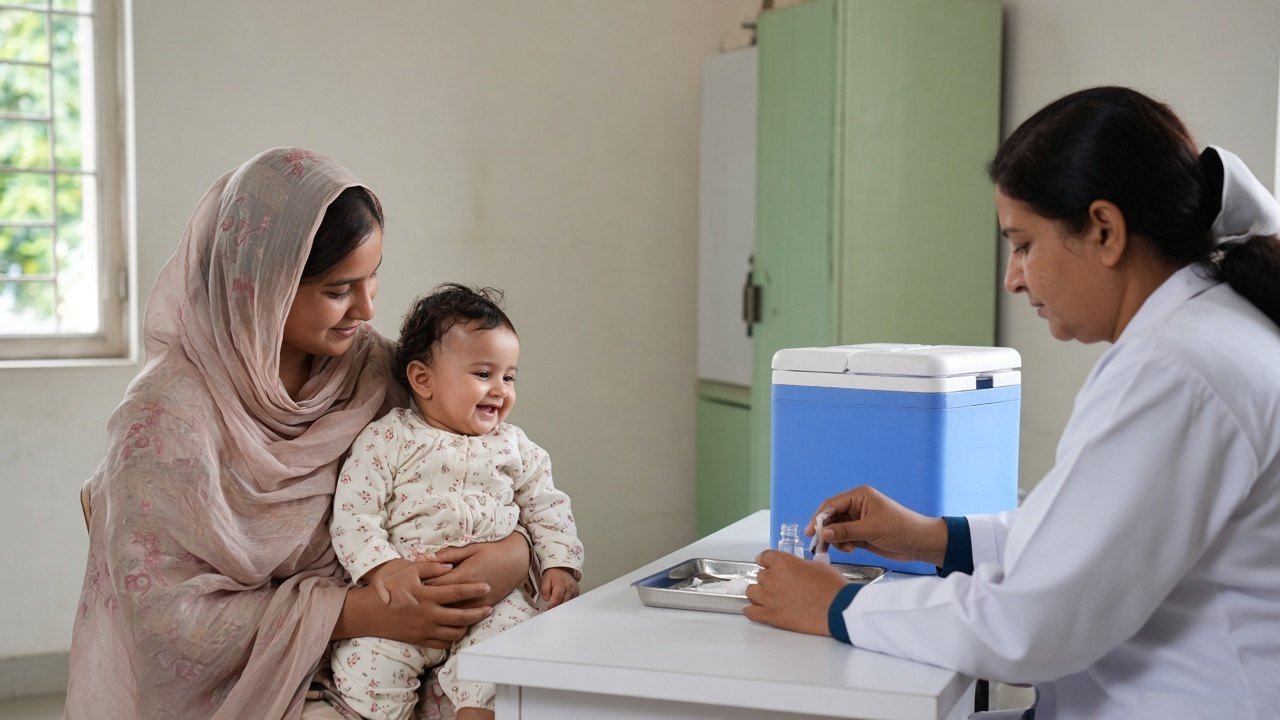
The official vaccination schedule Pakistan follows for babies has six visits, from birth to 15 months, and protects a child against 12 serious diseases. It is set by the Expanded Programme on Immunization (EPI) under the Federal Directorate of Immunization, and every vaccine on it is free at government immunization centres.
Below is the full chart in English, what each visit protects against, a simple way to work out your baby’s due dates, and what to do if a visit was missed. Keep this page handy alongside your child’s vaccination card.
Vaccination schedule Pakistan at a glance
- 6 visitsbirth, 6 weeks, 10 weeks, 14 weeks, 9 months and 15 months
- 12 diseasesincluding polio, measles, pneumonia and typhoid
- Freeat government immunization centres; Sehat Tahaffuz helpline 1166
Source: EPI Pakistan child immunization chart (Federal Directorate of Immunization), checked 14 November 2026.
Listen: one-minute audio summary
In this guide
Vaccination schedule Pakistan: the quick answer
What vaccines does a baby get in Pakistan and when?
At birth: BCG, OPV-0 and Hepatitis B. At 6 weeks: OPV-1, Rota-1, PCV-1 and Pentavalent-1. At 10 weeks: OPV-2, Rota-2, PCV-2 and Pentavalent-2. At 14 weeks: OPV-3, IPV-1, PCV-3 and Pentavalent-3. At 9 months: IPV-2, MR-1 and TCV. At 15 months: MR-2.
This is the schedule on the EPI chart published by the Federal Directorate of Immunization. EPI says it aims to vaccinate children aged 0 to 15 months against 12 vaccine-preventable diseases, and it also covers pregnant women.
The full EPI vaccination schedule Pakistan uses
| Visit | Age | Vaccines | Protects against |
|---|---|---|---|
| 1st | At birth | BCG, OPV-0, Hepatitis B | Childhood TB, polio, hepatitis B |
| 2nd | 6 weeks | OPV-1, Rota-1, PCV-1, Pentavalent-1 | Polio, diarrhoea, pneumonia, diphtheria, tetanus, hepatitis B, whooping cough, meningitis |
| 3rd | 10 weeks | OPV-2, Rota-2, PCV-2, Pentavalent-2 | Same as the 2nd visit |
| 4th | 14 weeks | OPV-3, IPV-1, PCV-3, Pentavalent-3 | Polio, pneumonia, diphtheria, tetanus, hepatitis B, whooping cough, meningitis |
| 5th | 9 months | IPV-2, MR-1, TCV | Polio, measles, rubella, typhoid |
| 6th | 15 months | MR-2 | Measles, rubella |
What the vaccine names mean
| Short name | Full name |
|---|---|
| BCG | Bacillus Calmette-Guerin (childhood tuberculosis) |
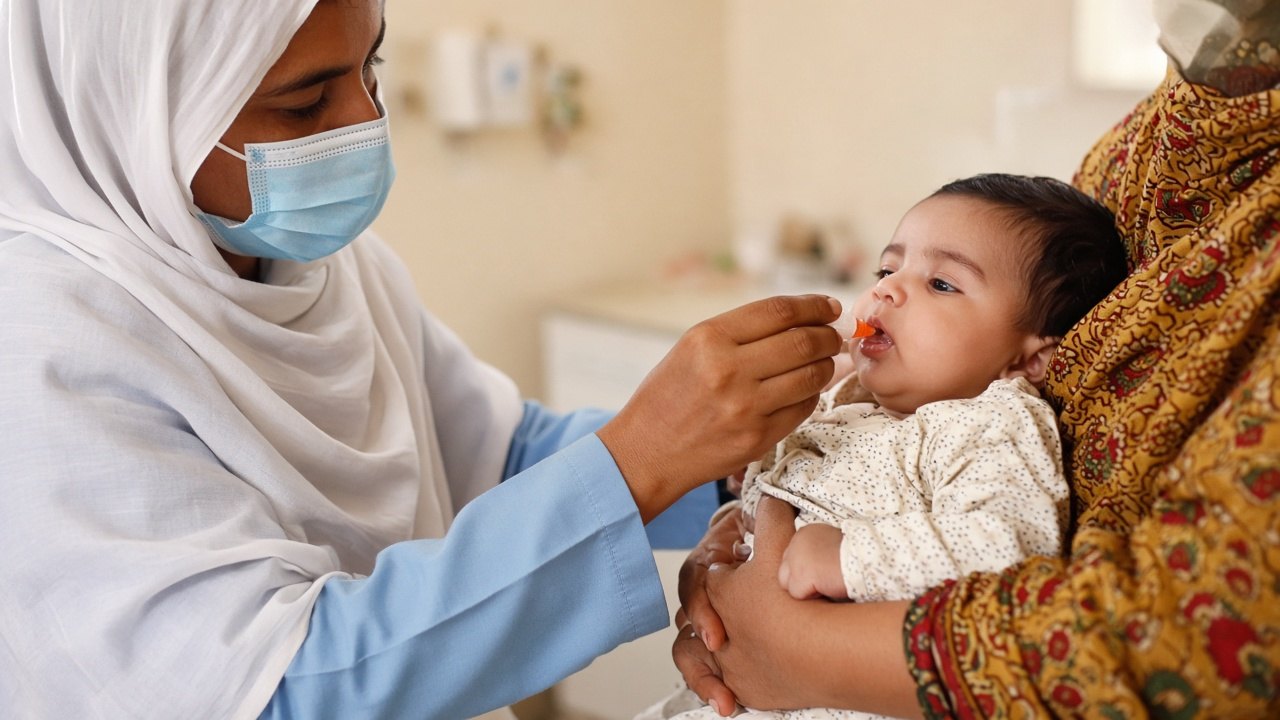
| OPV | Oral polio vaccine (drops) |
| IPV | Inactivated polio vaccine (injection) |
| Rota | Rotavirus vaccine (drops, against diarrhoea) |
| PCV | Pneumococcal conjugate vaccine (pneumonia) |
| Pentavalent (Penta) | Five-in-one vaccine on the EPI chart |
| MR | Measles and rubella vaccine |
| TCV | Typhoid conjugate vaccine |
The 12 diseases on the EPI list
Diseases covered by the routine schedule
- Childhood TBBCG at birth
- PolioOPV and IPV
- Hepatitis Bbirth dose and Penta
- Diarrhoearotavirus drops
- PneumoniaPCV and Penta
- DiphtheriaPenta
- TetanusPenta
- Whooping coughPenta
- MeningitisPenta and PCV
- MeaslesMR-1 and MR-2
- RubellaMR-1 and MR-2
- TyphoidTCV at 9 months
Disease list from the EPI Pakistan website and child immunization chart.
Some of these diseases still cause outbreaks. Our reports on the joint polio vaccination campaign with Afghanistan and the Khanewal measles outbreak show why completing every dose matters.
Visit by visit: what to expect
- At birthIdeally before you leave the hospital or within the first days. BCG, the first polio drops (OPV-0) and the hepatitis B birth dose.
- 6 weeksThe busiest early visit: polio and rotavirus drops plus the PCV and Pentavalent injections.
- 10 weeksThe same four vaccines again as second doses.
- 14 weeksThird doses of OPV, PCV and Pentavalent, plus the first IPV injection.
- 9 monthsIPV-2, the first measles-rubella dose and the typhoid conjugate vaccine.
- 15 monthsThe second measles-rubella dose completes the routine schedule.
Plan your baby’s due dates
The vaccination schedule Pakistan follows is counted from the date of birth. Write each due date on a calendar or set phone reminders. The worked example below is for a baby born on 1 January 2026.
| Visit | Rule | Example: born 1 Jan 2026 |
|---|---|---|
| 1st | At birth | 1 Jan 2026 |
| 2nd | Birth + 6 weeks (42 days) | 12 Feb 2026 |
| 3rd | Birth + 10 weeks (70 days) | 12 Mar 2026 |
| 4th | Birth + 14 weeks (98 days) | 9 Apr 2026 |
| 5th | Birth + 9 months | 1 Oct 2026 |
| 6th | Birth + 15 months | 1 Apr 2027 |
To use the method for your own baby, add 42, 70 and 98 days to the date of birth for the early visits, then add 9 and 15 calendar months for the last two. Your vaccinator will also write the next date on the card at each visit.
Getting ready for a vaccine visit
A little preparation makes each visit quicker and calmer for you and your baby. Most families find these steps help:
- Check the due date on the card a few days before and plan the trip in the morning, when centres are usually less crowded.
- Carry the vaccination card, the baby’s B-Form or birth record if you have it, and your own CNIC.
- Dress the baby in loose clothes so the vaccinator can reach the arm or thigh easily.
- Feed your baby as usual. Holding and feeding them after the injections can help them settle.
- Ask the vaccinator what to expect over the next day or two and when to come back if you are worried.
- Before you leave, check that every dose given today is written on the card with the date.
Routine visits and polio campaigns are different
Door-to-door polio campaigns give extra drops to children under five during campaign days. Those drops are in addition to the routine EPI schedule, not a replacement for it. Your child still needs every routine visit on the chart, including the IPV injections at 14 weeks and 9 months.
| Routine EPI visit | Polio campaign | |
|---|---|---|
| Who | Children aged 0 to 15 months on the schedule | Children in the campaign’s target age group |
| Where | Immunization centre or outreach vaccinator | Usually at home, at schools or at fixed points |
| Vaccines | All vaccines due on the chart | Oral polio drops |
| Recorded on | Child’s vaccination card | Campaign records and finger marking |
What to do if a vaccine visit was missed
Life gets in the way: illness, travel, a family event. If your child has missed a dose, the advice is simple: go to the nearest EPI centre as soon as you can, with the vaccination card. Do not wait for the next scheduled date and do not assume your child must start again. The vaccinator will check the card and tell you which doses to give and when.
- Take the vaccination card or any record you have.
- Tell the vaccinator if your child was ill recently or had a reaction last time.
- Ask for the date of the next visit and write it down.
- If you have no card, ask the centre to check its own register.
- For questions, call the Sehat Tahaffuz helpline 1166, which is printed on the EPI chart.
This guide explains the official schedule only. For any medical question about your child, including allergies, premature birth or a chronic illness, talk to a doctor or the vaccinator at your EPI centre.
Keep the vaccination card safe
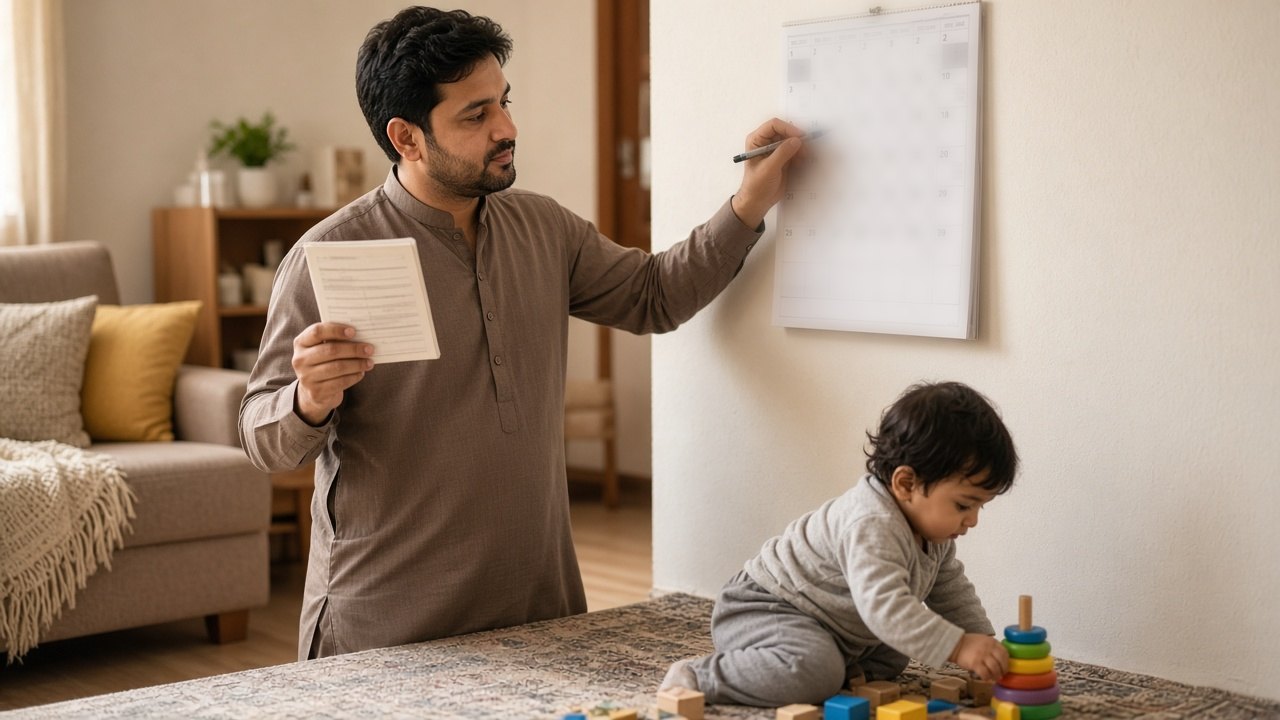
The card shows which vaccines have been given and when the next one is due. Schools, travel and some health services may ask for it later, so keep it with the B-Form and take a clear photo as a backup. A complete card is also the easiest way to show a new doctor exactly which doses your child has already had, if you move city or change centre.
- Bring the card to every visit and check that each dose is marked and dated.
- Keep a photo of each page on your phone.
- Check the next due date before leaving the centre.
- If the card is lost, ask the centre that vaccinated your child for its record.
Vaccination schedule Pakistan: FAQs
How many vaccines does a baby get in Pakistan?
The EPI chart lists six visits from birth to 15 months. Across those visits, a child receives BCG, OPV, IPV, Hepatitis B, Rotavirus, PCV, Pentavalent, MR and TCV, covering 12 diseases.
Are EPI vaccines free in Pakistan?
Yes. The EPI chart asks parents to get free vaccines for their children from the nearest immunization centre.
Which vaccines are given at 6 weeks in Pakistan?
OPV-1, Rota-1, PCV-1 and Pentavalent-1.
What vaccines are given at 9 months?
IPV-2, MR-1 (measles and rubella) and TCV (typhoid conjugate vaccine).
What is the last vaccine in the EPI schedule?
MR-2, the second measles-rubella dose, given at 15 months.
What should I do if my child missed a vaccine?
Visit the nearest EPI centre as soon as possible with the vaccination card. The vaccinator will check the record and tell you which doses to give.
Six visits in 15 months is a small commitment for a lifetime of protection. Save the vaccination schedule Pakistan chart above, set reminders, and bring the card every time.
